From the warehouse floor.
Field notes on FMCG distribution, route-to-market, modern trade and the discipline of getting goods from factory to shelf — written from Enugu, by the people doing the work.

 6 min read
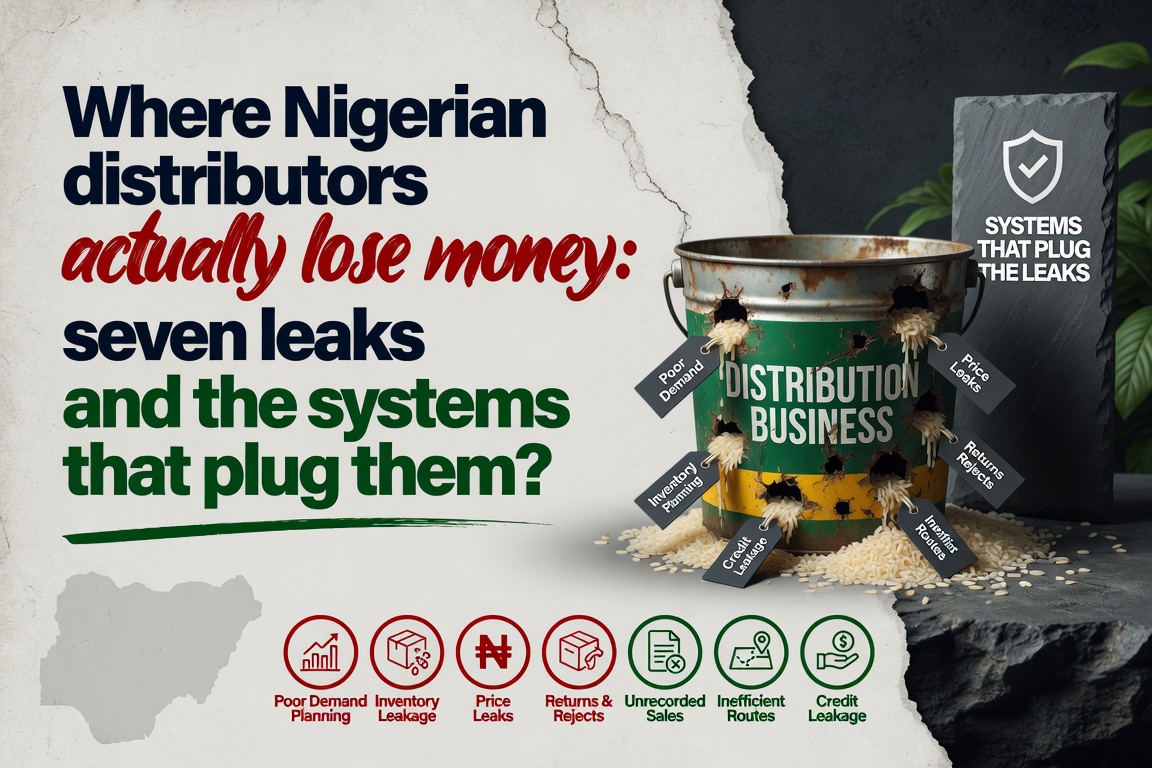
Seven leaks that drain distributors
Ghost visits, convenient write-offs, unmatched payments, silent credit, expired stock, fuel without arithmetic, and the reports nobody can trust — and the boring design that fixes each one.
 5 min read
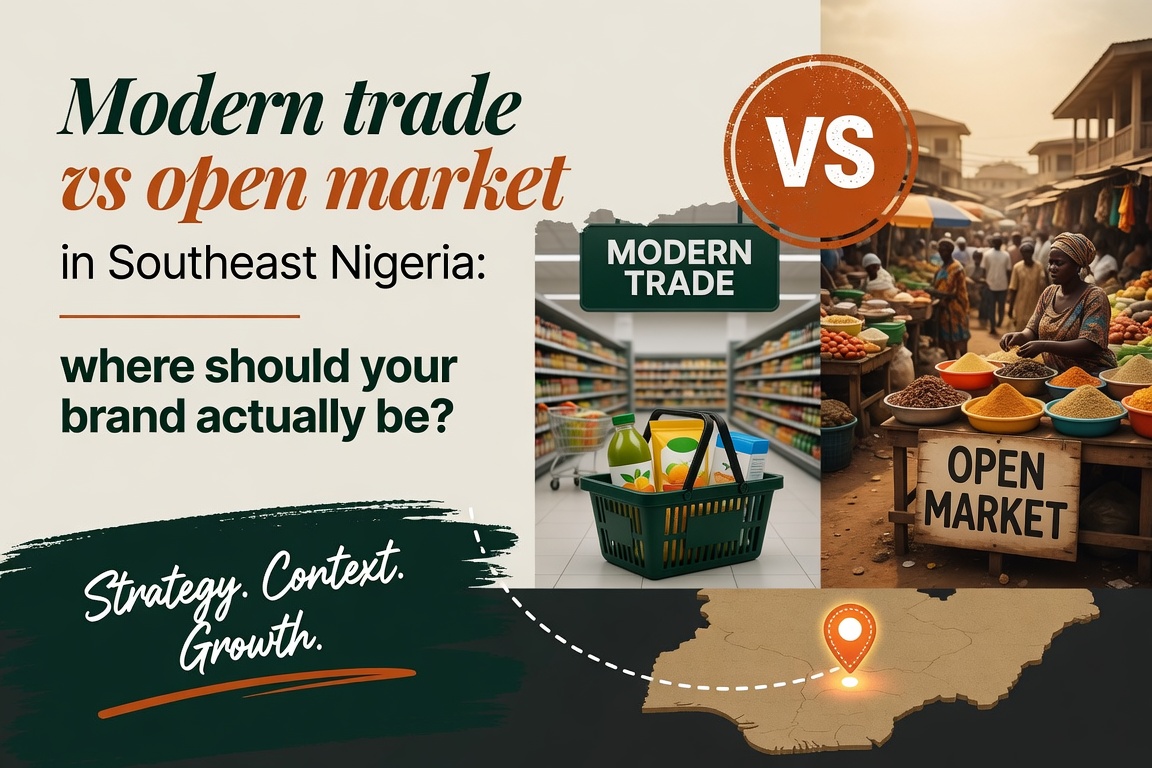
Modern trade vs open market
The two channels run on different clocks, different paperwork and different economics. How manufacturers and their distributors should play each — from a team that runs both daily.
 5 min read
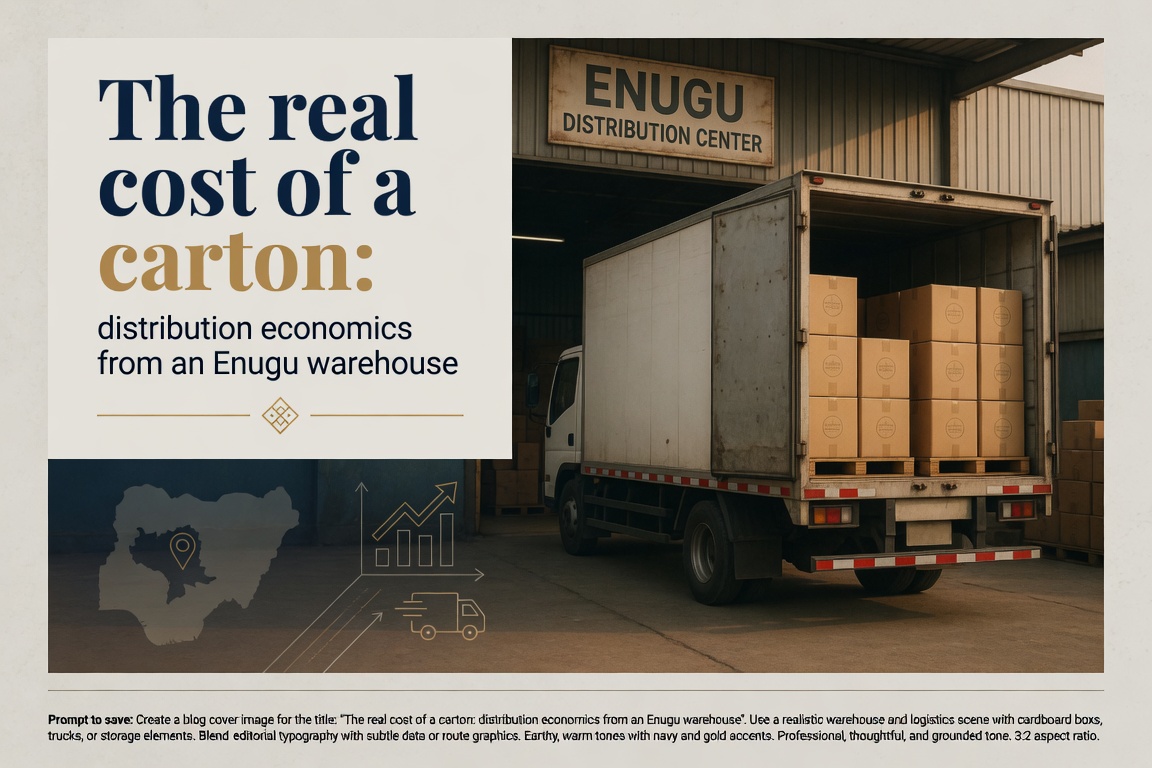
The real cost of a carton
Why the 'same' carton has five prices, what the distributor margin actually pays for, and why the cheapest source is often the most expensive teacher.
 6 min read
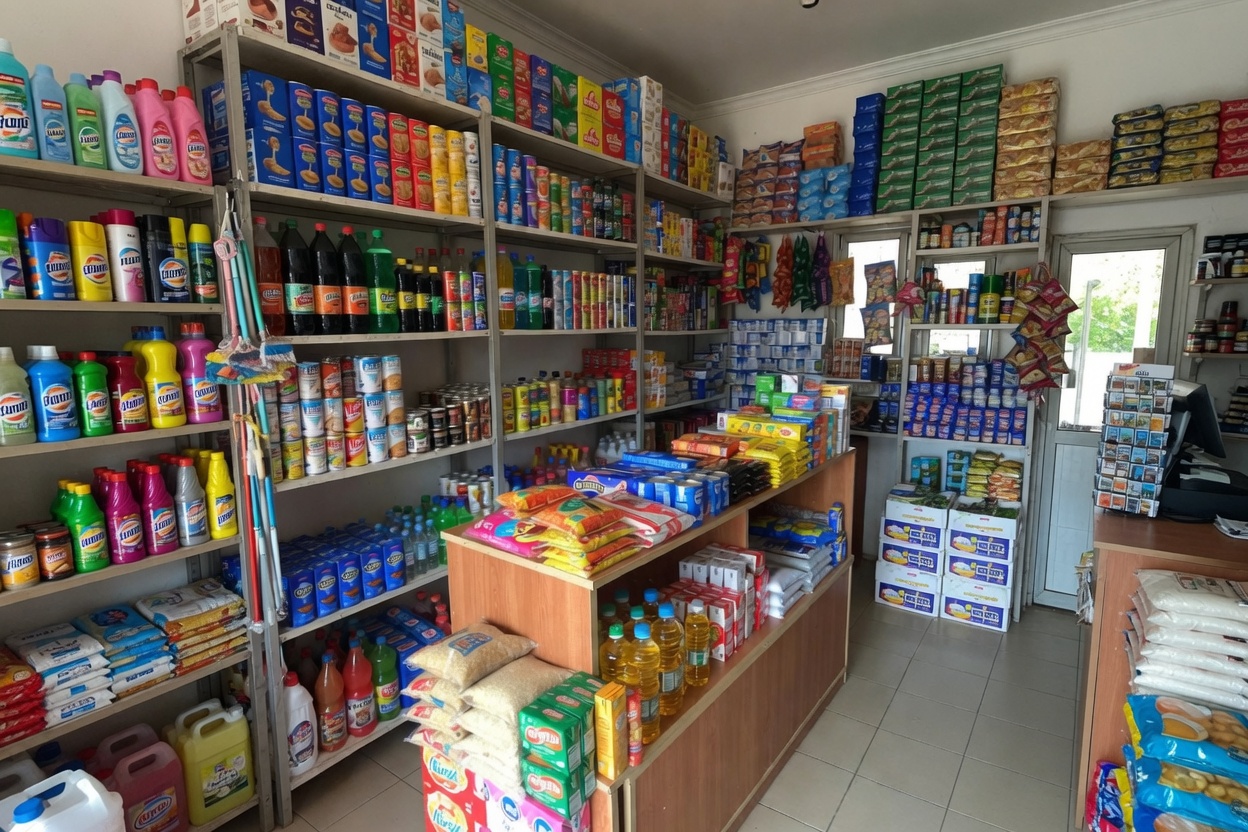
How to start a provision store
Location, first stock list, supplier choice, credit discipline and expiry rotation — what actually separates the provision stores that grow from the ones that quietly close.
How goods really reach the shelf
A carton leaving the Enugu warehouse and a carton landing on an Onitsha shelf are, on paper, the same journey. In practice, the gap between those two points is where most distribution breaks.
Five years, zero payment fraud
Bank-only payments, separated roles, an append-only hash-chained ledger and dual timestamps — the four design decisions behind a number principals ask about in due diligence.
Field notes, once a month.
Distribution insight from the Southeast — no spam, just what we're learning.